 ultimate-guide
Is Foundation Repair Covered by Insurance? A 2026 Guide
Table of Contents
- Is Foundation Repair Covered by Insurance? The Short Answer
- What Homeowners Insurance Covers and What It Excludes
- Signs of Foundation Failure That Point to a Covered Cause
- Plumbing Leak Foundation Damage: The Exception That Gets Claims Paid
- How to File a Foundation Insurance Claim Step by Step
- Step 1: Read Your Policy Before You Do Anything Else
- Step 2: Document Everything Before You File
- Step 3: Get a Professional Foundation Inspection
- Step 4: Fix the Source If It Is a Plumbing Leak
- Step 5: File the Claim Promptly
- Step 6: Meet the Adjuster on Site
- Step 7: Get a Repair Estimate
- What to Do If Your Claim Is Denied
- What the Foundation Inspection Process Looks Like Before You File
- Conclusion: Get a Local Assessment Before You Assume the Worst
- Frequently Asked Questions
Last Updated: October 4, 2026
Is Foundation Repair Covered by Insurance? The Short Answer
Most standard homeowners insurance policies do not cover foundation repair when the cause is long-term soil movement, settling, or poor maintenance.
Homeowners across Pearland and Southeast Houston ask us this question constantly, and the honest answer depends entirely on what caused the damage. The Insurance Information Institute's homeowners insurance guide draws a clear line between sudden events and gradual deterioration, and that line decides almost every claim.
Your policy language matters more than the cause itself. A plumbing leak under a slab may be covered. The same crack from clay soil expansion is almost never covered. Knowing which one you have is the whole game.
Below, we break down what is covered, what is excluded, and how to document damage so an adjuster takes your claim seriously.
What Homeowners Insurance Covers and What It Excludes
A homeowners insurance policy protects your home against specific named events, called covered perils, and excludes everything else. Foundation damage falls on the excluded side far more often than homeowners expect.
Foundation repair covered by insurance generally means the foundation was damaged by a sudden event the policy lists. Everything gradual, predictable, or maintenance-related sits outside that protection.
Covered Perils: Fire, Burst Pipes, and Other Sudden Events
Sudden and accidental events are the clearest path to a paid claim. If a pipe bursts inside a wall and water undermines part of your slab, the resulting damage is typically covered under dwelling coverage. Fire, explosions, and falling objects like a tree limb can also qualify.
The key word is sudden. An adjuster will ask when the damage happened and whether you could have prevented it. A pipe that failed overnight is sudden. A pipe that dripped for two years is not.
Common Exclusions: Earth Movement, Wear and Tear, and Poor Maintenance
Earth movement is the exclusion that ends most foundation claims in this region. Expansive Gulf Coast clay soil swells when it rains and shrinks during drought, pushing and pulling on a slab or pier and beam foundation year after year. Insurers classify this as earth movement or soil expansion, both standard exclusions.
Wear and tear, gradual deterioration, and maintenance neglect are also excluded. So are faulty construction and poor drainage that let water pool against the foundation. None of these are sudden, and none are covered.
Signs of Foundation Failure That Point to a Covered Cause
The signs of foundation failure look similar whether the cause is covered or not, so the pattern, timing, and direction of movement matter more than any single crack. Here is how to read them.
Settling vs. Heaving vs. Subsidence: Why the Direction Matters
These three terms describe how your foundation is moving, and each points to a different cause, and a different insurance outcome.
Settling means the foundation is sinking into the soil.
Heaving means the foundation is being pushed upward. This happens when clay soil swells after heavy rain and expands against the slab.
Subsidence is a broader term for ground sinking beneath the foundation.
The practical takeaway: if your foundation is moving because of soil moisture changes, your claim will almost certainly be denied.
Symptoms That Point to a Covered Cause
These signs are more likely to be tied to a sudden event like a plumbing failure:
- A cluster of new cracks that appeared within days or weeks, not months
- Cracks concentrated near a bathroom, kitchen, or laundry area where supply lines run under the slab
- Warm spots or damp areas on the floor that suggest a slab leak
- A water bill that jumped without explanation
- The sound of running water when all fixtures are off
- Soil that has visibly eroded or settled around the foundation perimeter after a known leak
Symptoms That Point to an Excluded Cause
These signs typically indicate long-term soil movement or maintenance issues:
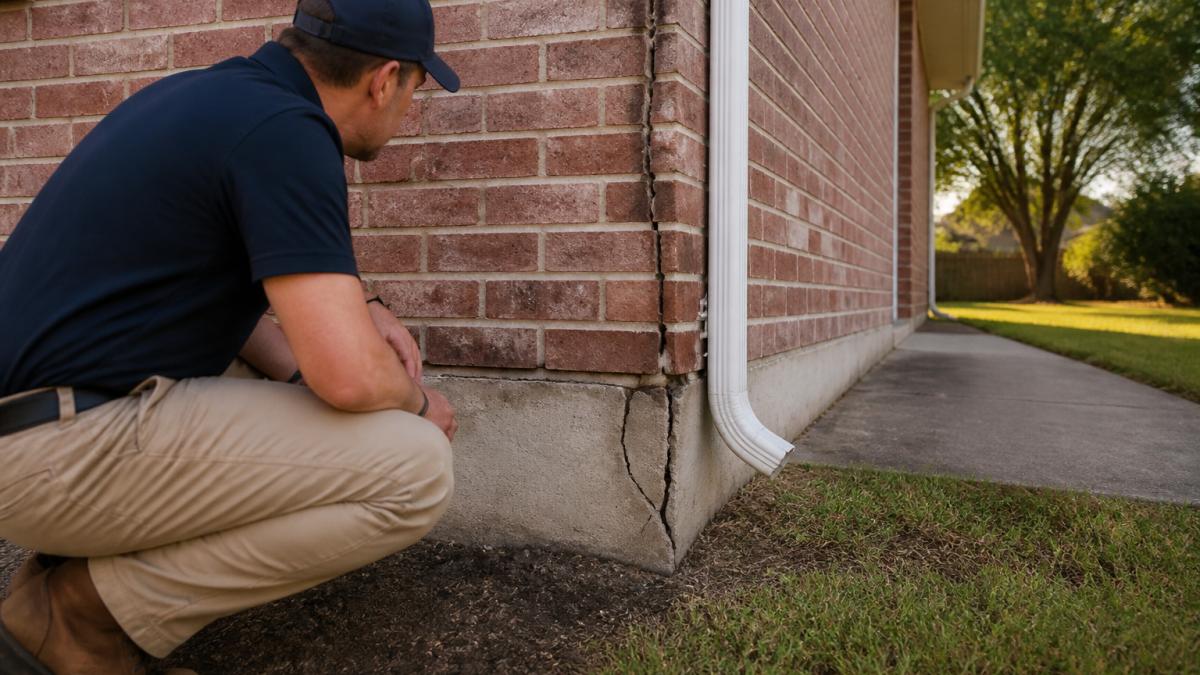
- Stair-step cracks in brick veneer that have widened slowly over years
- Doors and windows that stick more in summer than winter (a sign of clay expansion and contraction)
- Sloping floors that have been uneven for as long as you can remember
- Cracks in drywall that reappear after patching
- Gaps between the wall and ceiling that follow a seasonal pattern
- Cracks in a slab foundation that are wide, offset, or accompanied by uneven floors
Why the Pattern Matters More Than Any Single Sign
A single hairline crack in drywall is often cosmetic. A cluster of new cracks appearing within weeks of a plumbing event is a different story. Take dated photos of everything and note when each sign first appeared.
If you are seeing any of these signs, an on-site inspection is the only way to confirm what is happening. A written report stating the cause in plain terms is the most valuable document you can bring to a claim.
Plumbing Leak Foundation Damage: The Exception That Gets Claims Paid
Plumbing leak foundation damage is the most common covered scenario.
Water damage from a covered plumbing failure is typically included. The catch is proving the leak was sudden rather than a slow drip that went unnoticed for months.
If you suspect a leak, look for a water bill that jumped without explanation, the sound of running water when nothing is on, or warm spots on the floor.
How to File a Foundation Insurance Claim Step by Step
Filing a foundation insurance claim follows a defined sequence, and skipping steps is the fastest way to a denial. The difference between a paid and denied claim often comes down to how well you document the cause and how carefully you read your policy first.
Step 1: Read Your Policy Before You Do Anything Else
Before you call your insurer, find your policy's declarations page and the exclusions section. Look for these specific terms:
- Earth movement, this is the exclusion that ends most foundation claims. It typically includes earthquakes, landslides, and soil settling or expansion.
- Wear and tear, gradual deterioration from age or lack of maintenance.
- Faulty workmanship, damage caused by improper construction or repair.
- Water damage, read the fine print. Sudden and accidental discharge from a plumbing system is often covered. Seepage or leakage that occurs over 14 days or more is typically excluded.
Also check for endorsements or riders that add coverage. Some policies offer optional coverage for specific perils, and some insurers offer a foundation endorsement in certain states. If you are unsure what your policy says, call your agent and ask them to point you to the language that applies to foundation damage.
Step 2: Document Everything Before You File
Your adjuster decides based on the evidence you provide. Gather this before you submit your claim:
- Dated photos of every crack, gap, and sloping floor. Use a ruler or coin for scale.
- A written timeline of when each symptom first appeared. Note any events that coincided with the damage, such as a plumbing leak, heavy rain, or drought.
- Maintenance records showing you have maintained your home's drainage, gutters, and plumbing. This helps counter a denial based on neglect.
- Plumber's report if you suspect a leak. Ask the plumber to state the cause and the approximate date of failure in writing.
- Water bills showing any unexplained spikes.
Step 3: Get a Professional Foundation Inspection
An on-site assessment identifies the cause and gives you a written report to submit. It should separate cosmetic issues from structural ones and state the likely cause in plain terms. This is the document your adjuster weighs most heavily.
Step 4: Fix the Source If It Is a Plumbing Leak
Repair the pipe and keep the plumber's invoice and diagnosis. Most policies require you to mitigate further damage, and fixing the source shows you acted responsibly.
Step 5: File the Claim Promptly
Report the loss, provide your documentation, and request a written proof of loss form. Most policies have a deadline for filing claims, often one year from the date of loss, but check your specific policy.
Step 6: Meet the Adjuster on Site
Walk them through the evidence and point out the covered cause directly. Have your photos, timeline, and inspection report ready. If the adjuster seems focused on earth movement, be prepared to explain why you believe the cause is a sudden event.
Step 7: Get a Repair Estimate
A written estimate from a qualified professional supports your claim amount. Keep copies of every document.
What to Do If Your Claim Is Denied
If the claim is denied, the denial letter will cite a specific exclusion. Read it carefully. If the denial is based on earth movement but you have evidence of a plumbing leak, you may be able to appeal with additional documentation.
If you are not sure whether you have a covered cause, an inspection through Foundation First TX can give you a clear answer before you file. We provide a written assessment you can use for your claim and connect you with a vetted local professional when repair is recommended.
What the Foundation Inspection Process Looks Like Before You File
A foundation inspection is a professional on-site evaluation of your home's elevations, drainage, and soil conditions.

During the visit, an inspector measures floor elevations room by room, checks the exterior for cracks and gaps, examines grading and gutters, and looks for signs of plumbing leaks.
The report that follows is what you hand to your insurer. It separates what is cosmetic from what is structural and states the likely cause in plain terms.
Conclusion: Get a Local Assessment Before You Assume the Worst
Sorting out whether foundation repair is covered by insurance starts with knowing what caused the damage, and that requires an on-site look. Homeowners in Pearland, Friendswood, Alvin, Manvel, Sugar Land, and across Southeast Houston deal with expansive clay soil that makes this question harder to answer than elsewhere.
At Foundation First TX, we provide a straightforward foundation inspection and connect you with a vetted local repair professional when repair is recommended.
Request an inspection through Foundation First TX and get a clear picture of your foundation before you decide anything.
Frequently Asked Questions
Is foundation repair covered by homeowners insurance?
Usually not, on its own. Standard policies cover foundation damage only when it traces back to a covered peril, such as a burst pipe, fire, or a falling tree. Damage from soil movement, settling, or gradual wear is excluded. If a plumber's leak soaked the soil under your slab, that sudden water damage may be covered. An inspection helps you identify the actual cause before you file.
Does insurance cover foundation issues caused by plumbing leaks?
Often yes, if the leak was sudden and accidental rather than a slow drip you ignored for years. A slab leak that saturates expansive clay soil can lift or shift a foundation, and that chain of events is what adjusters evaluate. Keep the plumber's report, photos of the leak, and the repair invoice. In Pearland and Southeast Houston, where clay soil reacts fast to moisture, documenting the timing of the leak matters a great deal.
How can I tell if my foundation damage is caused by a covered peril?
Look at the timeline. Damage that appeared suddenly after a specific event, like a pipe burst, a fire, or a storm, is more likely covered. Damage that built up over years, such as cracks widening slowly through drought cycles, points to soil movement, which policies exclude. Signs of foundation failure like sticking doors, sloping floors, and brick veneer gaps usually develop gradually, so a professional inspection is the clearest way to connect the damage to its cause.
What steps should I take if I suspect foundation damage?
First, document everything: photograph cracks with a ruler for scale, note when each sign appeared, and save any plumbing or repair receipts. Second, stop the source if it is active, such as a leaking pipe. Third, request an inspection so you have an independent report on the cause and extent. Then review your policy exclusions and endorsements before contacting your insurer, so you know what to expect. Request an inspection through Foundation First TX to start.